


I’m giving a free online talk about how I use AI in my work and how I think about its impact on everyone else’s work. It’s happening tomorrow — Tuesday, October 6 — at 5 p.m. ET.
On the agenda:
How is AI affecting jobs and the overall economy? A few data points I am tracking, and my overall thesis on how to even think about this question.
A live demo of how I use AI, the tools I’ve built with it, and how I mitigate the inherent limitations of LLMs.
Questions and open discussion.
You can sign up for free here.
I was invited to give this talk by my online friends Eleanor and Hugo. They are launching a course on how to use AI agents to build tools and products for yourself and others. You can learn more about the course here — my subscribers get a 25% discount, but only with this link.
A preview of what I’ll cover tomorrow:
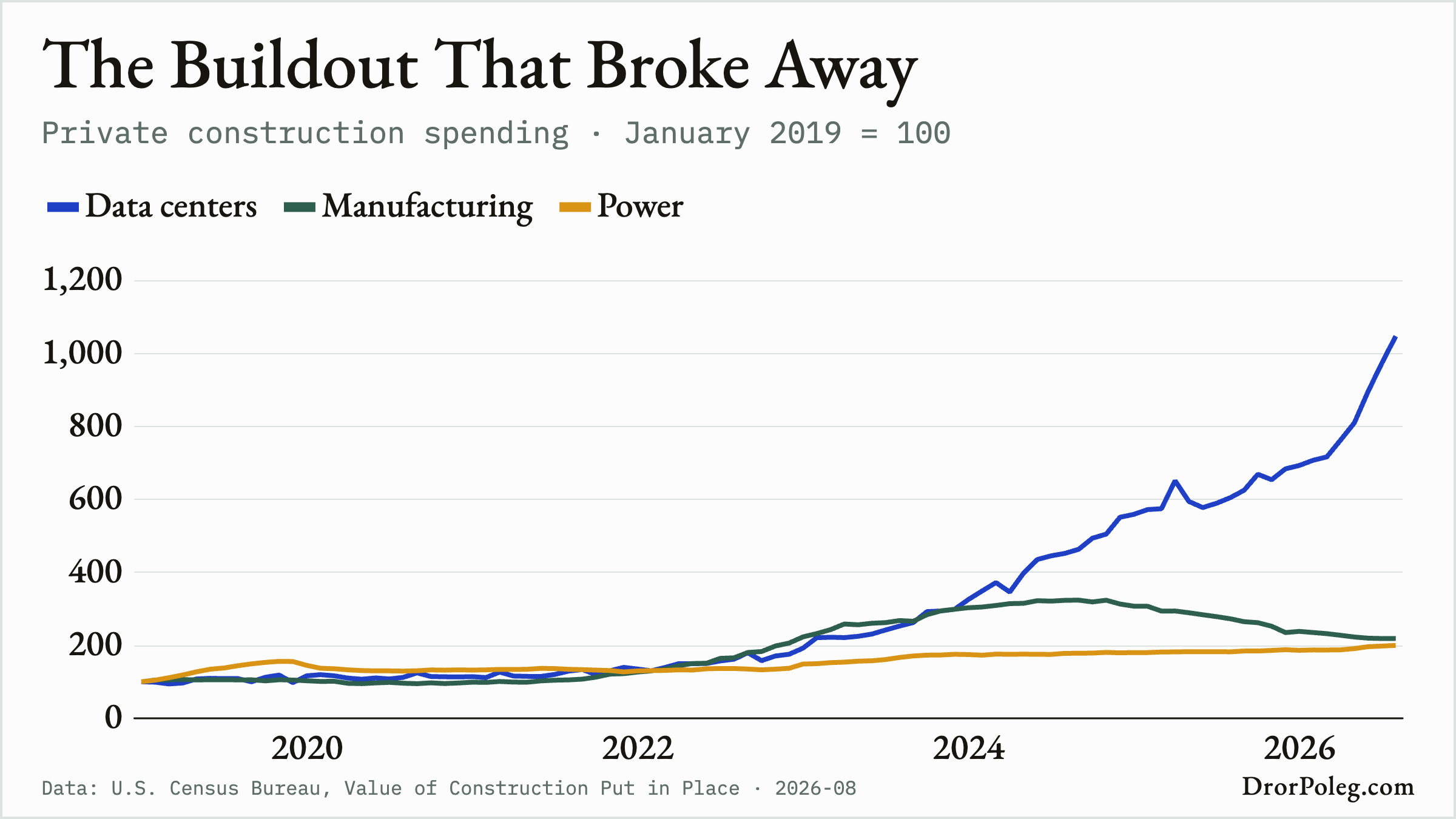
The money is pouring in, but the jobs aren’t following.
Data center construction spending has grown about 10-fold since 2019:
Meanwhile, hiring has slowed to a crawl. According to Zillow Research, the three-month average of payroll gains fell to 51,000 in September, down from 179,000 a few years ago.
We’ve seen this before. Real spending on factory construction more than doubled after 2022. Manufacturing employment barely moved:
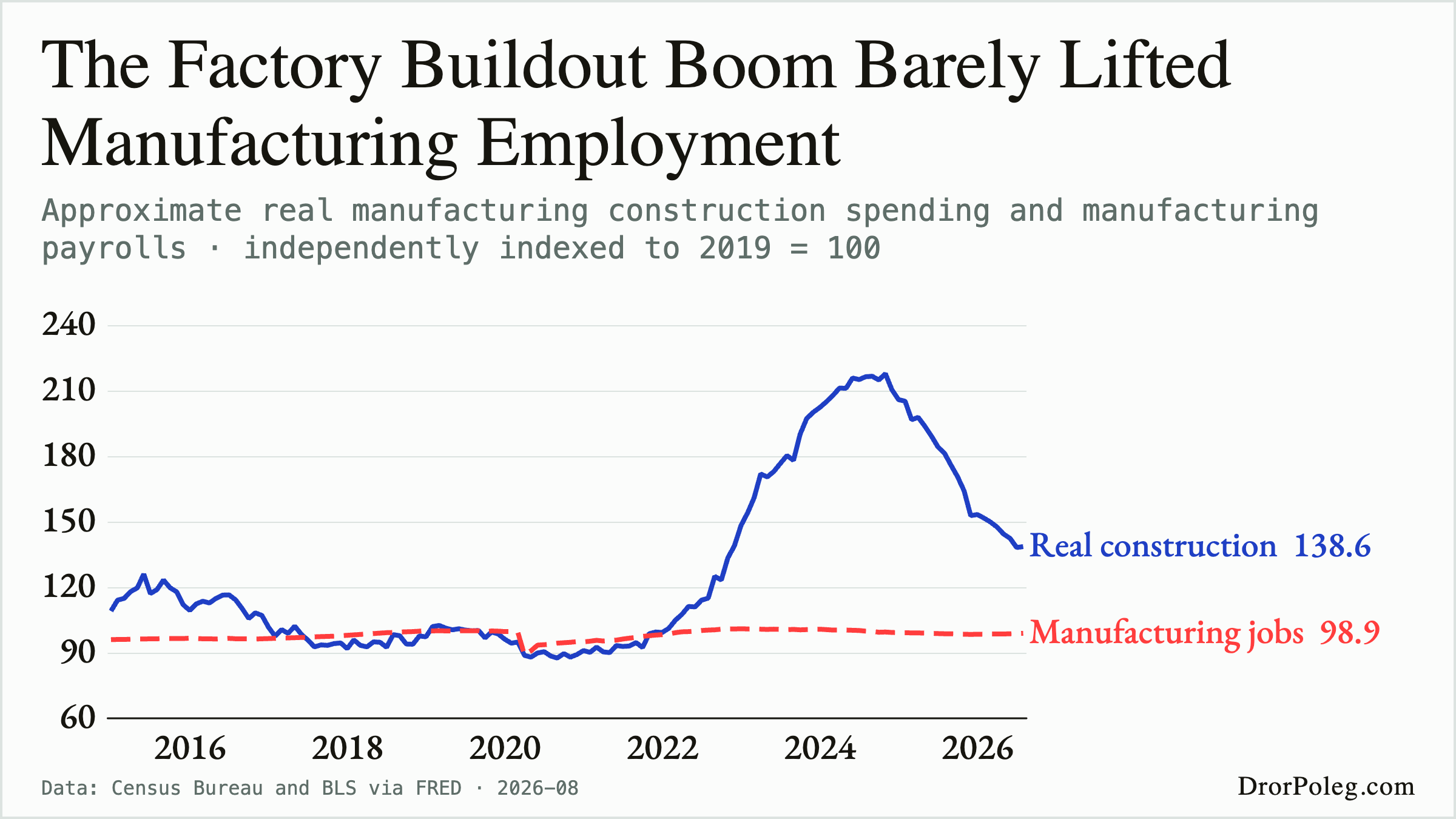
Manufacturing is a preview of the office: more investment and output, not enough hiring. It’s the same decoupling of economic activity from labor I wrote about in Rethinking Real Estate back in 2019.
And the jobs that remain may be worth less. A new NBER working paper finds that when technology makes jobs easier to do, it can also make workers easier to replace with other (human) workers, which preserves the job but erodes the employees’ bargaining power:
“Technical change often simplifies jobs. This increases productivity, but it also makes workers more substitutable–or more ‘commoditized.’ Commoditization of labor drives down worker bargaining power: anyone can do the job, implying workers are disposable, which improves the outside option of firms and can lower worker wages.”
Another recent study finds that exposure to generative AI explains about a third of the recent drop in the college wage premium.
We’re getting more evidence of what I discussed with Jacob Shapiro earlier this year: AI doesn’t want to replace you; it wants to make you interchangeable.
Tomorrow I’ll talk about how to think about all this, and show how I use AI in my own work. Sign up for free here.