Here Come the Ants: Anthropic's Cash, Cult, and Code
Once the AI giant goes public, its mission becomes more complicated.

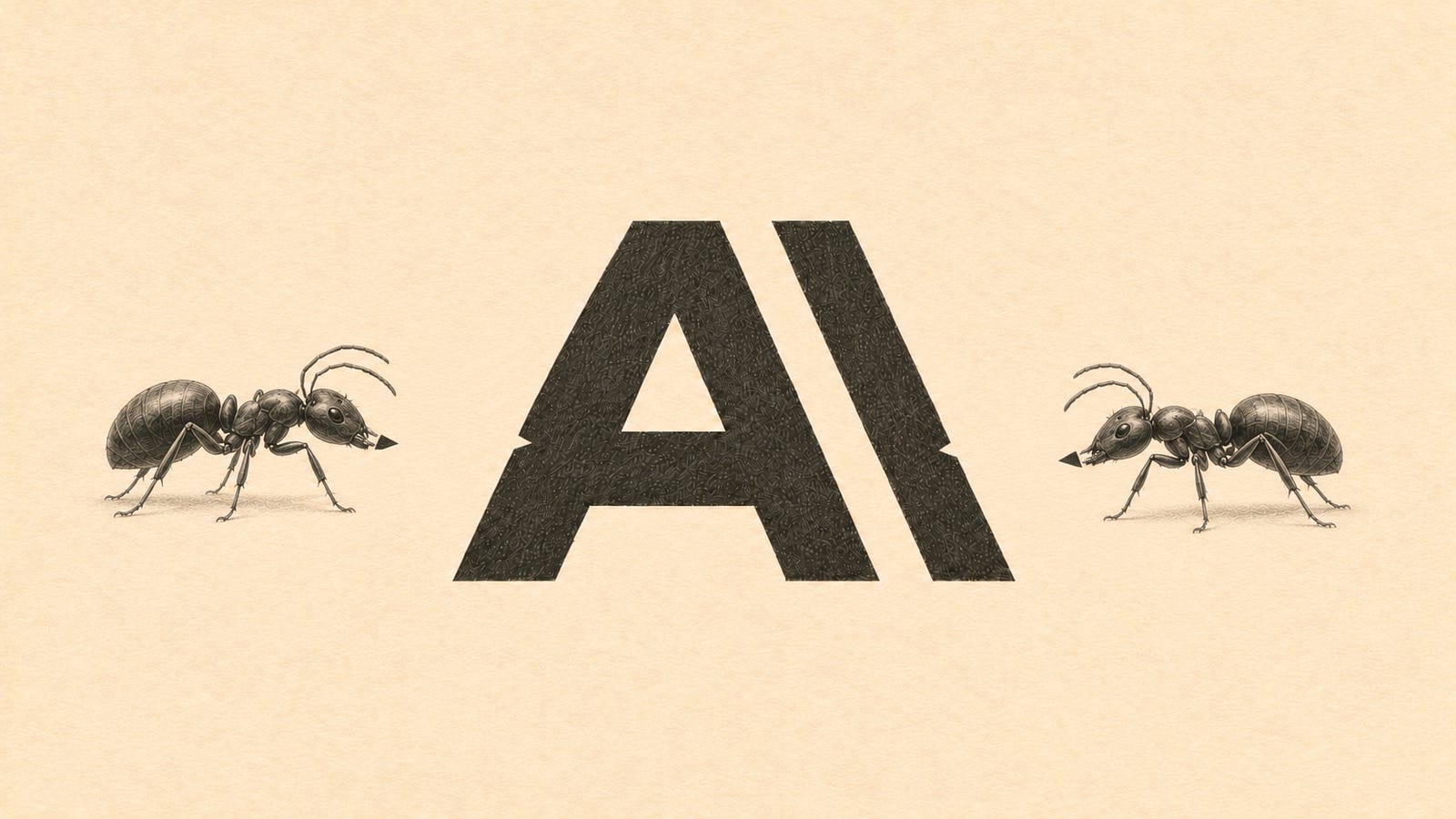
It took Google thirteen years to reach $30 billion in annual revenue. Facebook took thirteen years, too. Anthropic got there in less than six. Today it becomes the first frontier AI lab to go public.
I don’t own any Anthropic shares and don’t plan to buy any just yet. I’ve written about why. What interests me in the company’s IPO prospectus is not the price; it’s how the company works.
Anthropic is on track to generate more than $50 billion in revenue this year, with a revenue run rate above $80 billion. Anthropic is doing so with about 5,300 people — fewer employees than The New York Times. Less than two years ago, at the end of 2024, it had fewer than a thousand. At September’s headcount, over $50 billion in annual revenue would work out to around $10 million per employee, multiple times the level of formidable companies like Meta, Alphabet, and Apple.
Anthropic achieves such productivity by relying on its own AI models. The company says Claude wrote more than 90% of the contributions to its own codebase in September. In 2025, its growth marketing team was one person. When that marketer needed a tool to sift through hundreds of ads, spot the ones doing poorly, and draft replacements, they built it with Claude.
A company that can run on this few people has to be careful which ones it chooses. Anthropic employees call themselves Ants. To become one, every candidate sits through a culture interview. One applicant told Axios they were asked how they’d feel if Anthropic walked away from its AI ambitions over safety concerns and the stock went to zero. That’s an interesting question from an employer that relies heavily on stock-based compensation. And, a cynic would say, an easy question to answer while the company’s valuation keeps going up.
People who join Anthropic tend to stick around. All seven of the company’s founders are still there. Last year, SignalFire found that 80% of Anthropic hires were there at their second anniversary, compared with 67% at OpenAI and 64% at Meta. Dario Amodei, the company’s CEO, estimates that he spends up to 40% of his time on culture. Claude may write most of the code, but the boss spends nearly two days a week nurturing his employees' faith in Anthropic’s mission. Many companies have missions, but Anthropic’s is particularly ambitious: To shape “the future of AI and, in turn, the future of our world.”
So far, believing in this mission has also been the way to get rich. The IPO prospectus lists 1.8 billion stock options with an average exercise price of $2.91, plus more than a billion stock units. At the IPO price of $83, that’s about $235 billion for a company of 5,300 people. Employees can sell up to a tenth of their locked-up stock on the first day of trading. By outside estimates, most Anthropic employees are about to become millionaires, and more than a thousand could hold more than $10 million apiece in Anthropic shares. Dario Amodei and his sister Daniela, the company’s president, each hold about $20 billion.
Going public will split the Ants in two. The ones who joined early will never have to work again. The prospectus warns this “could affect their decisions about whether or not they continue to work for us.” Those who joined late get the opposite deal: their stock comes at close to market price, and they’ll have to keep working to reach the same levels of wealth.
Going public will give the company plenty of new cash to fund continued growth and innovation. It will also change the interaction between the company’s culture, financial incentives, and willingness to release ever-more-powerful AI models. Even before the IPO, safety concerns have already led Anthropic to delay some product releases; the company warns that such delays “may become more frequent and more costly.”
When the company was private, such delays didn't immediately affect its stock price. In some cases, they even added to its mystery and appeal. And as the valuation kept rising, early employees didn't have to pay a financial price for prioritizing (or at least professing) the good of humanity. As a public company, every decision to delay a product could trigger an immediate drop in valuation. After the IPO, older employees will have more to lose, but might also check out and enjoy their wealth. Meanwhile, recent hires won't get rich unless the stock keeps rising. In both cases, most employees will face different incentives and dilemmas than they did up to this week.
For Anthropic’s faithful, the IPO fulfills a prophecy. Cash, cult, and code have brought the company to the Promised Land — ahead of similar ventures founded and funded by some of Silicon Valley’s most powerful figures. But arriving in the Promised Land also means the miraculous journey is over and the daily grind begins.
Still, congratulations are in order. Well done, Ants! This is a remarkable achievement and a testament to human ingenuity and, well, faith.
☎️ What does AI mean for your industry and organization?
Would you like to stress-test your own plans and ideas? Book a 60-minute executive briefing to discuss these questions with me directly.
🎤 Planning a conference or leadership offsite?
I speak about how AI is reshaping work, places, and markets—and what it means for your organization. Explore my keynote topics and get in touch.
Discussion about this post